
Understanding the Journey Behind Every Garment
A finished garment may look simple when displayed in a store. Behind that product, however, is a complex chain of materials, people, machinery, planning, and quality checks.
A T-shirt, for example, may require yarn, knitting, dyeing, fabric testing, cutting, sewing, finishing, packing, and shipment before it reaches a buyer’s warehouse.
For international fashion brands, understanding this process is important. It helps buyers estimate timelines, prepare accurate product specifications, identify risks, and communicate effectively with suppliers.
Bangladesh has a large apparel manufacturing ecosystem that supports many of these activities. The exact process depends on the garment category, fabric type, factory capabilities, and customer requirements.
This guide explains the major stages of apparel production and what buyers should know at each step.
1. Buyer Inquiry and Product Specification
The apparel supply chain usually begins with a buyer’s product requirement.
This may include:
- Product design.
- Technical specification.
- Fabric composition.
- Color and print details.
- Size chart.
- Quantity.
- Target price.
- Delivery schedule.
- Packaging requirements.
A buyer may provide a tech pack containing measurements, construction details, artwork, and material specifications.
The clearer the information, the easier it is for a supplier to prepare a quotation and develop an accurate sample.
Why product details matter
A simple request such as “cotton T-shirt” may not be sufficient for costing.
A factory may need to know:
- Is the fabric 100% cotton or a blend?
- What is the GSM?
- Is the fabric single jersey, rib, or another structure?
- What is the required fit?
- Is the garment printed or embroidered?
- What type of label and packaging is required?
Different specifications can significantly affect production cost and lead time.
2. Yarn and Fabric Sourcing
Fabric is one of the most important components of a garment.
For knitwear, the production process may begin with yarn selection. For woven apparel, fabric may be sourced through woven textile production.
Common apparel materials include:
- Cotton.
- Polyester.
- Cotton-polyester blends.
- Viscose.
- Elastane blends.
- Recycled fibers.
- Other customer-specified textiles.
The material should be selected according to the garment’s intended use.
For example, a lightweight summer T-shirt may require a different fabric from a heavyweight sweatshirt.
What buyers should confirm
Before approving a fabric, buyers should consider:
- Fiber composition.
- GSM or fabric weight.
- Fabric width.
- Stretch and recovery.
- Shrinkage.
- Colorfastness.
- Hand feel.
- Performance requirements.
The buyer should request relevant test results where necessary.
3. Knitting or Woven Fabric Production
For knit garments, knitting machines create fabric from yarn using loops.
Different knitting structures produce different characteristics.
Examples include:
- Single jersey.
- Rib.
- Interlock.
- Pique.
- Fleece.
- Other specialized knit structures.
For woven garments, fabric is created by interlacing yarns in a woven structure.
The selected fabric construction affects appearance, drape, comfort, durability, and production requirements.
A sourcing partner should help buyers communicate the correct fabric specification to the supplier.
4. Dyeing and Fabric Finishing
After fabric production, the material may undergo dyeing and finishing.
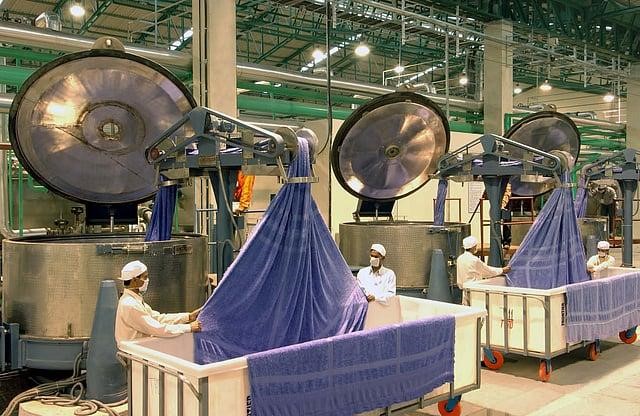
Dyeing gives the fabric its required color. Finishing may help achieve the desired hand feel, appearance, shrinkage control, or other performance characteristics.
The exact process varies according to fiber type and fabric construction.
Important quality checks
Buyers should pay attention to:
- Color matching.
- Shade consistency.
- Shrinkage.
- Fabric defects.
- Hand feel.
- Colorfastness.
- Width and weight.
For fashion brands, color consistency is particularly important when producing multiple batches of the same product.
A difference in shade between production lots may affect the finished collection.
5. Sample Development and Approval
Before bulk production, buyers usually need to approve samples.
Sampling allows the buyer to evaluate the actual product instead of relying only on drawings or descriptions.
The sample process may include:
Typical sample development
- Initial or development sample.
- Fit sample and measurement review.
- Size-set sample, where required.
- Pre-production sample.
- Final buyer approval.
The buyer should review:
- Fit.
- Measurements.
- Fabric.
- Color.
- Construction.
- Stitching.
- Artwork placement.
- Trims and labels.
- Packaging.
Bulk production should not begin until the required approvals are completed.
6. Pattern Making and Grading
Pattern making converts the garment design into the shapes used for cutting fabric.
A pattern defines the dimensions and construction of individual garment parts.
Grading then creates different sizes based on the approved size chart.
For example, a brand may require sizes XS, S, M, L, and XL.
Accurate grading helps ensure that the fit remains consistent across the size range.
Why buyers should review measurements
A garment can look correct in one sample size but have problems in other sizes if grading is not handled properly.
Buyers should provide a clear measurement chart and specify acceptable tolerances.
7. Fabric Cutting
Once the fabric is approved and ready, it is cut into garment components.
The cutting process may involve:
- Fabric spreading.
- Marker planning.
- Cutting.
- Bundle preparation.
- Component identification.
Cutting accuracy is important because incorrect shapes or sizes can affect garment construction.
Fabric utilization also matters for costing. Efficient marker planning may help reduce fabric waste, although actual savings depend on fabric width, pattern design, and production requirements.
8. Printing, Embroidery, and Special Treatments
Some garments require additional processes before or during sewing.
These may include:
- Screen printing.
- Digital printing.
- Embroidery.
- Appliqué.
- Heat transfer.
- Washing.
- Special finishing.
The process should be selected based on the design and fabric.
For example, a print intended for a stretch fabric may require a different method from artwork applied to a rigid woven material.
Buyer approval
Artwork placement, color, dimensions, and appearance should be approved before bulk production.
A print that looks correct on a digital design may look different on the finished fabric.
9. Sewing and Garment Assembly
Sewing is where cut components are assembled into a garment.
Different operations may include:
- Shoulder joining.
- Sleeve attachment.
- Side seam sewing.
- Collar attachment.
- Hemming.
- Pocket construction.
- Waistband attachment.
- Label sewing.
The exact sequence depends on the garment style.
Production efficiency and workmanship are influenced by machine selection, operator skills, line balancing, and quality control.
Common sewing quality concerns
- Uneven seams.
- Broken stitches.
- Skipped stitches.
- Open seams.
- Incorrect thread tension.
- Poor seam alignment.
- Incorrect construction.
Inline inspections can help identify these problems during production.
10. Washing and Finishing
Some garments require washing or additional finishing after sewing.
Examples include:
- Garment wash.
- Softening.
- Special appearance treatments.
- Pressing.
- Thread trimming.
- Shape setting.
Washing requirements should be agreed upon in advance because they can affect color, shrinkage, appearance, and hand feel.
For denim and fashion garments, finishing treatments may be a major part of the product’s design.
11. Final Inspection and Quality Assurance
Before packing, finished garments should undergo the required quality checks.
The inspection process may include:
- Measurement verification.
- Fabric and workmanship inspection.
- Color and shade checks.
- Print or embroidery review.
- Label and trim verification.
- Packing accuracy.
- Carton quantity checks.
Some buyers specify an AQL-based inspection procedure. AQL is a statistical sampling approach used in certain inspection systems; it should not be treated as a guarantee that every garment is defect-free.
The buyer and supplier should agree on the inspection standard and acceptance criteria.
12. Packing and Shipment Preparation
After finishing and inspection, garments are packed according to buyer instructions.
Packing may include:
- Folding.
- Polybagging.
- Size sorting.
- Carton packing.
- Carton marking.
- Packing list preparation.
The packing method should protect garments during transportation and support efficient warehouse handling.
For international shipments, documentation and freight arrangements should be coordinated carefully.
13. Export Documentation and Logistics
The export stage may involve several parties, including:
- Garment supplier.
- Buying agency.
- Freight forwarder.
- Customs and logistics service providers.
- Buyer or importer.
Depending on the transaction and destination, documents may include commercial invoices, packing lists, shipping documents, and other required paperwork.
Requirements differ according to shipping terms, destination, product, and applicable regulations.
A professional sourcing partner can help coordinate the information flow between suppliers and buyers.
14. Why Buyers Need Production Monitoring
Production monitoring helps buyers understand whether an order is progressing according to the approved plan.
It can include:
- Material readiness.
- Cutting status.
- Sewing progress.
- Finishing status.
- Inspection results.
- Packing status.
- Shipment readiness.
Early communication is essential if a problem arises.
For example, a fabric delay may affect the sewing schedule. If the buyer is informed early, alternative planning may be possible.
Finally
The Bangladesh garment industry supports a wide range of activities, from fabric development to finished garment shipment.
Understanding this supply chain helps buyers make better decisions about specifications, costing, quality, and delivery.
The most successful apparel sourcing projects are based on clear communication, realistic planning, reliable suppliers, and consistent quality control.
ELITE SOURCING BD helps international buyers navigate the apparel sourcing process and coordinate garment production from Bangladesh.
Need Help With Garment Production?
Share your product requirements with ELITE SOURCING BD for professional sourcing support and production.
Start your work with Elite Sourcing BD.
FAQs
1. What are the main stages of garment manufacturing?
The process commonly includes material sourcing, fabric production, dyeing, sampling, cutting, sewing, finishing, inspection, packing, and shipment. The exact sequence depends on the garment.
2. What is the role of fabric quality in apparel production?
Fabric affects appearance, comfort, durability, fit, shrinkage, and cost. Buyers should approve fabric specifications and relevant testing before bulk production.
3. How long does garment production take in Bangladesh?
Lead time varies according to product complexity, material availability, order quantity, factory capacity, and buyer approvals. A supplier should provide a project-specific schedule.
4. Why is sample approval important?
Sample approval allows buyers to confirm fit, construction, fabric, color, and other requirements before committing to bulk production.
5. What does production monitoring involve?
It involves following material readiness, production progress, quality checks, finishing, packing, and shipment readiness.