
Garment Dyeing Process: A Complete Guide
Garment dyeing is the process of coloring a finished garment after it has been cut and sewn. Unlike piece dyeing, where fabric is colored before it is made into clothing, garment dyeing gives manufacturers greater flexibility to produce specific shades in smaller batches and respond more quickly to changing demand.
For apparel brands and sourcing teams, understanding the garment dyeing process is important. Each stage—from garment preparation to final inspection—can influence shade consistency, fabric feel, colorfastness and the overall quality of the finished product.
What Is Garment Dyeing?
In garment dyeing, assembled clothing is placed in a dye bath and processed as a finished item. The technique is commonly used for casualwear, knitwear, and styles where a soft, slightly lived-in appearance is desired.
Because the fabric, sewing thread, labels and trims may respond differently to dye, achieving a consistent result requires careful material selection and process control.
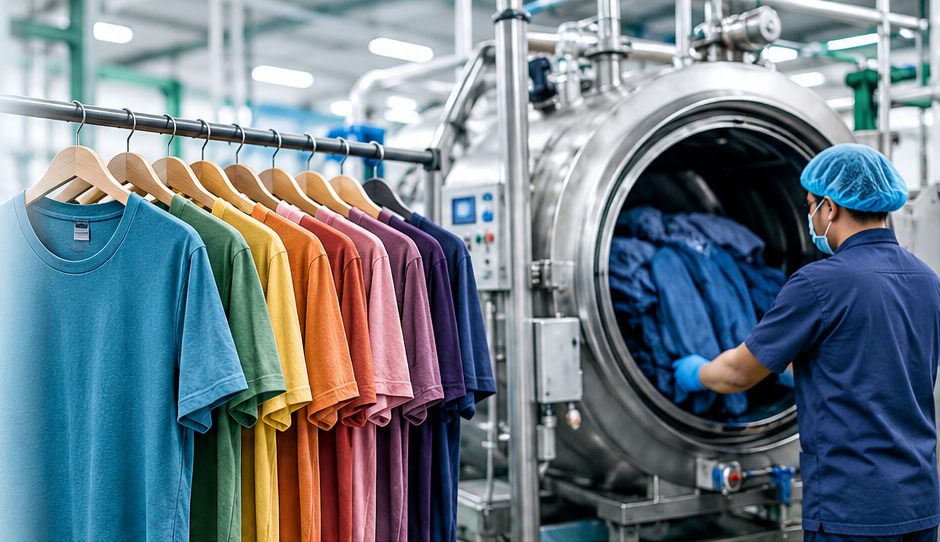
10 Key Steps in the Garment Dyeing Process
1. Garment preparation and sorting
Garments are inspected and sorted by fiber content, weight, construction and target shade. They are then loaded into an appropriate dyeing machine, either directly or in mesh bags.
All garment components should be reviewed before processing. For example, polyester sewing thread on a cotton garment may not absorb the same dye, leaving the seams a different color. Labels, zippers, buttons and trims can also affect the final appearance.
The load size is matched to the machine’s capacity. Water use varies by equipment and process, but the liquor ratio—the amount of water relative to garment weight—is an important factor in both dyeing performance and resource use.
2. Pre-treatment
Pre-treatment removes substances that could interfere with dye absorption and helps prepare the garment for even coloring. Depending on the materials and the required shade, this stage may include:
- Desizing: Removing starch or sizing left from fabric production, often with enzymes.
- Scouring: Washing away oils, waxes, dirt and other residues.
- Bleaching: Reducing the fabric’s natural color when a light or bright shade is required.
- Rinsing and neutralizing: Removing treatment residues and adjusting the garment’s pH before dyeing.
Not every garment requires every treatment. The preparation is selected according to the fabric, garment construction and desired result.
3. Dye bath preparation
The dye bath is prepared with water, the selected dye and any required auxiliaries. Dye choice depends primarily on the fiber:
- Cotton and other cellulosic fibers may use reactive, direct, vat or sulfur dyes.
- Polyester is generally dyed with disperse dyes.
- Nylon, wool and silk are often dyed with acid dyes.
Auxiliaries can help manage water hardness, improve dye distribution, and support dye absorption. The recipe and process conditions should be matched to the fiber and dye system.
4. Dyeing
The garments are loaded into a machine suited to the style, fabric, and batch size. Common equipment includes paddle dyeing machines, rotary drum machines, and overflow machines.
Temperature is generally controlled and raised according to the dyeing recipe. Gradual heating can help promote more even dye uptake.
For cotton dyed with reactive dyes, salt may be added to encourage the dye to move from the bath onto the fiber. Alkali, such as soda ash, is then used to help the dye bond with the cotton. Polyester dyeing typically requires higher temperatures so disperse dye can diffuse into the fiber; pressurized machines may be used.
Dyeing time varies by material, shade, equipment, and recipe. The process may run for roughly 30 to 90 minutes at the target temperature, though actual requirements differ.
5. Rinsing
After dyeing, the spent bath is drained and the garments are rinsed to remove loose dye and processing chemicals. Rinsing may begin with cold water and continue with warmer water, depending on the dyeing system.
6. Soaping and wash-off
Soaping removes unfixed dye from the garment. This is particularly important for reactive-dyed cotton, where some dye may not have bonded with the fiber.
A thorough wash-off helps reduce color bleeding and supports better wash fastness. The temperature and duration depend on the dye and process recipe.
7. Fixing and after-treatment
Some dye systems benefit from a fixing treatment after dyeing. A suitable fixing agent may improve resistance to washing or wet rubbing, depending on the dye, fiber and performance requirements.
This step is not identical for every garment; the after-treatment should be chosen based on test results and the product’s intended use.
8. Softening and finishing
Dyeing can change a garment’s hand feel. Softeners—such as silicone-based or other compatible finishing agents—may be applied to achieve the desired softness and drape.
Additional finishes can also be included at this stage, such as wrinkle resistance, water repellency or enzyme washing for a softer, worn-in appearance. Any finish should be compatible with the garment’s materials and end-use requirements.
9. Hydro-extraction and drying
Excess water is removed using a centrifugal extractor or similar equipment. Garments are then dried using tumble dryers or other suitable methods.
Drying conditions are managed to help limit unwanted shrinkage, distortion, or damage to garment details.
10. Quality control
Before garments are approved, the finished batch is checked against the required quality standards. Inspection may cover:
- Shade matching against an approved color standard
- Color uniformity, including patches, streaks, or uneven seams
- Colorfastness to washing, rubbing, perspiration, and light
- Shrinkage and dimensional stability
- Garment appearance, hand feel, and finishing quality
Color can sometimes be corrected through additional dyeing or stripping and re-dyeing, but correction is not always possible without affecting quality. Careful process control from the start is therefore essential.
Benefits of Garment Dyeing
Garment dyeing offers flexibility for brands and manufacturers. Plain garments can be produced or held before the final color is decided, then dyed in smaller lots to meet specific orders. This can support faster response to new color trends and help brands manage a broader range of shades.
The process can also create distinctive color effects and a soft, casual appearance that may be difficult to achieve through other dyeing methods.
Challenges to Consider
The finished color may vary between batches and across different garment components. Fabric, thread, labels and trims can each absorb dye differently, making material compatibility and sampling especially important.
Garment dyeing also involves water, energy and chemicals. Responsible process management—including appropriate wastewater treatment, efficient water use and careful chemical handling—can help reduce environmental impact.
Key Considerations for Apparel Buyers
Before approving a garment-dyed style, brands and sourcing teams should confirm that the fabric, thread, trims and construction are suitable for the process. They should also review lab dips or development samples, approve a clear shade standard and agree on testing requirements before bulk production.
Early communication between the product team, supplier and dye-house can help reduce shade issues and improve consistency across production lots.
Frequently Asked Questions
1. Is garment dyeing different from fabric dyeing?
Yes. In garment dyeing, the clothing is colored after it has been cut and sewn. In fabric dyeing, the material is dyed before garment construction.
2. Does garment dyeing affect fit or size?
It can. Heat, moisture and mechanical action may cause shrinkage or dimensional changes so garments should be tested and measured after processing.
3. Why can seams or trims appear a different color?
Different fibers absorb different dye types. If the thread or trim is made from a fiber that does not take the garment dye, it may remain lighter or show a contrasting shade.
4. What improves colorfastness in garment dyeing?
A properly selected dye system, controlled processing, thorough wash-off, suitable after-treatment and quality testing all contribute to colorfastness. Results depend on the fiber, dye and garment’s intended use.
Final Thoughts
The garment dyeing process offers brands greater color flexibility and the ability to produce finished garments in responsive, smaller batches. Its success depends on more than choosing a shade: fiber compatibility, garment preparation, dye selection, process control, finishing and quality testing all play a role.
For apparel buyers and sourcing teams, planning these details early helps set clear expectations and supports a more consistent final product.