
Bangladesh Needs a High-Tech Park for the Apparel Industry
Bangladesh’s apparel industry has grown into a major export engine, but its next stage of growth will depend on more than production capacity. In fiscal year 2024–25, ready-made garment (RMG) exports reached about US$39.35 billion, representing 81.49% of the country’s total exports, according to BGMEA export data. To compete for the next generation of orders, manufacturers must keep improving productivity, product quality, delivery reliability and environmental performance.
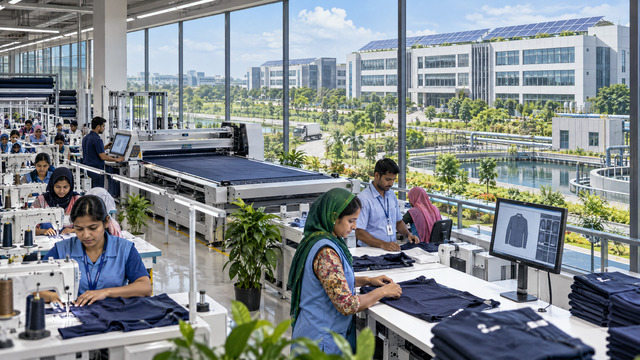
A purpose-built high-tech park for the apparel industry could help make that transition practical. It would not simply be another industrial estate or a collection of factory buildings. It would be a connected manufacturing and innovation ecosystem where apparel producers can access modern infrastructure, skilled people, applied research, digital tools and shared services.
What is a high-tech park for apparel manufacturing?
Bangladesh already has hi-tech parks focused on information technology and IT-enabled services. An apparel-focused park would serve a different but complementary purpose: applying technology and innovation across garment production and its supply chain. The Bangladesh Hi-Tech Park Authority describes its mandate around investment infrastructure and skilled human resources for the IT/ITES sector. A garment-industry park would build on the broader idea of a planned innovation hub while tailoring its facilities to apparel manufacturers, textile suppliers, testing services and fashion businesses.
That could mean production-ready plots and factory space alongside shared laboratories, digital manufacturing demonstration centers, worker-training facilities, energy and water services, logistics support and spaces for supplier collaboration. The goal would be to make advanced capabilities easier to access—not to require every factory to build every service on its own.
Why the apparel industry needs this next step
1. Productivity must grow alongside production capacity
For years, Bangladesh has earned global recognition for its ability to manufacture apparel at scale. But scale alone does not guarantee stronger competitiveness. Manufacturers also need better planning, lower rework, reliable quality and efficient use of materials, labor and machine time.
Technology can support these gains when it is paired with practical know-how. Digital product development, automated fabric spreading and cutting, production-planning software, machine monitoring and digital quality records can help factories spot bottlenecks earlier and make faster decisions. A shared park could provide demonstration facilities and advisory support so manufacturers can test these tools before making major investments.
The case for capability-building is supported by broader evidence. In a study discussed by the World Bank, a 25% increase in a firm’s overall technology level was associated with a 3% increase in profits per worker in Bangladesh’s manufacturing sector. This is an association, not a guaranteed return for every factory, but it underlines why technology adoption and management skills belong in the competitiveness conversation.
2. Shared infrastructure can make cleaner production more achievable
Sustainable manufacturing depends on day-to-day systems: energy efficiency, water management, wastewater treatment, chemical handling and responsible waste management. When each facility has to solve these challenges alone, the cost and technical burden can be substantial—particularly for smaller suppliers.
A well-planned apparel park could provide reliable utilities and professionally managed shared services, such as water-reuse systems, effluent treatment, renewable-energy integration, resource monitoring and textile-waste collection. These services must be designed for the park’s actual tenant mix and operated transparently. A park label alone does not make production sustainable; measured performance and credible management do.
This direction aligns with priorities already discussed by BGMEA, including resource efficiency, water stewardship, energy use and greener industrial zones. Shared infrastructure could help turn those priorities into practical services that factories can use and measure.
3. A skilled workforce is essential to smart manufacturing
Modern equipment creates value only when people know how to operate, maintain and improve it. As factories adopt digital systems and more automated processes, they need production engineers, machine technicians, data-literate supervisors, quality specialists and workers trained to use new tools safely and confidently.
An apparel high-tech park could bring technical institutes, universities, machinery suppliers and manufacturers together to develop hands-on training. Courses could cover industrial engineering, automated cutting, machine maintenance, digital patternmaking, production software, quality systems, energy management and workplace safety. Training should include pathways for current workers as well as new entrants, so technological progress strengthens careers rather than leaving people behind.
4. Better logistics and coordination can support dependable delivery
Global buyers look for suppliers that can manage quality, compliance and delivery with confidence. Roads, ports, customs processes, warehousing and shipment coordination all affect how smoothly an order moves from materials to finished garments.
A 2019 World Bank analysis of apparel value chains identified logistics and infrastructure as important constraints on responsiveness at the time. Conditions and investments change, but the broader lesson remains relevant: a modern production cluster should be connected to transport networks and designed around how materials and finished goods actually move. Shared warehousing, digital shipment coordination and access to support services could help reduce avoidable delays—provided the park is located and managed with real logistics needs in mind.
5. Testing, product development and innovation can help factories move up the value chain
A stronger apparel ecosystem needs more than sewing capacity. Manufacturers can benefit from nearby support for fabric and garment testing, fit and sample development, pattern engineering, color and wash evaluation, product compliance and low-volume prototyping. These capabilities can make it easier to develop more complex products and respond to buyer requirements with reliable technical evidence.
A high-tech park could also create a space for joint problem-solving among factories, material suppliers, universities, technology providers and buyers. With clear safeguards for confidential information, these partnerships can help turn practical production challenges into better processes, new product ideas and stronger local expertise.
6. Smaller suppliers could gain access to capabilities they cannot build alone
Advanced software, laboratories, training and environmental services can be expensive to develop independently. Shared facilities could give smaller and mid-sized manufacturers access to equipment and expertise on a pay-for-use or membership basis. That could broaden the benefits of modernization beyond the largest exporters—if pricing, eligibility and service quality are designed inclusively.
What would make an apparel high-tech park successful?
A park will not create competitiveness by location alone. Its design and governance matter as much as its buildings. A credible project would need reliable electricity, water, high-speed connectivity, safe worker transport, strong links to ports and highways, and sufficient wastewater and waste-management capacity. It should also have a clear operating model, transparent service charges and maintenance plans that continue after construction is complete.
The park should be built around the needs of manufacturers and workers. That means involving factories, sourcing partners, technology providers, training institutions and worker representatives in planning. It also means offering practical access to small suppliers, protecting worker health and safety, providing opportunities for women’s advancement, and measuring outcomes such as productivity, defects, energy and water use, training completion and delivery reliability.
Finally, the park should complement—not duplicate—existing industrial zones and ICT infrastructure. Bangladesh’s apparel sector needs digital expertise, but it also needs sector-specific facilities that connect technology to fabric, machinery, production lines and buyer requirements.
A strategic opportunity for Bangladesh’s garment industry
The necessity of a high-tech park for the apparel industry is ultimately about preparing for what global sourcing increasingly demands: consistent quality, dependable execution, responsible production and the capacity to keep improving. Bangladesh’s export scale provides a strong foundation. Coordinated investment in skills, applied technology and shared infrastructure could help more manufacturers build on it.
For brands and retailers sourcing from Bangladesh, a stronger innovation ecosystem can make supplier capabilities easier to develop and production programs easier to manage. For manufacturers, it can create new access to expertise and services. For workers, it can open pathways to higher-skilled roles—when training, safety and inclusion are built into the plan from the start.
Elite Sourcing BD works with EU and US buyers across the apparel production lifecycle, from product development to final shipment. As a Bangladesh-based sourcing partner, Elite Sourcing BD can help buyers connect product requirements with qualified local manufacturers and responsible production practices. Looking to source apparel from Bangladesh?
Frequently asked questions
What is a high-tech park for the apparel industry?
It is a planned manufacturing and innovation hub that combines apparel-ready facilities with shared technology, training, testing, sustainability and logistics services. Its purpose is to help manufacturers access capabilities that are difficult or costly to build separately.
How could a high-tech park benefit Bangladesh’s garment industry?
It could support productivity, digital adoption, workforce training, product testing, cleaner production and supply-chain coordination. The benefits would depend on dependable infrastructure, useful services and fair access for manufacturers of different sizes.
Would an apparel high-tech park replace existing garment factories?
No. The concept is to complement existing factories by offering shared infrastructure and specialized services. Factories would remain central to production, while the park could help them adopt new technologies and improve operations.
How can an apparel park support sustainable manufacturing?
It can make resource-efficient services easier to access, including energy management, water reuse, wastewater treatment and textile-waste handling. Sustainability outcomes should be verified through measurable data rather than assumed from the park’s name or design.